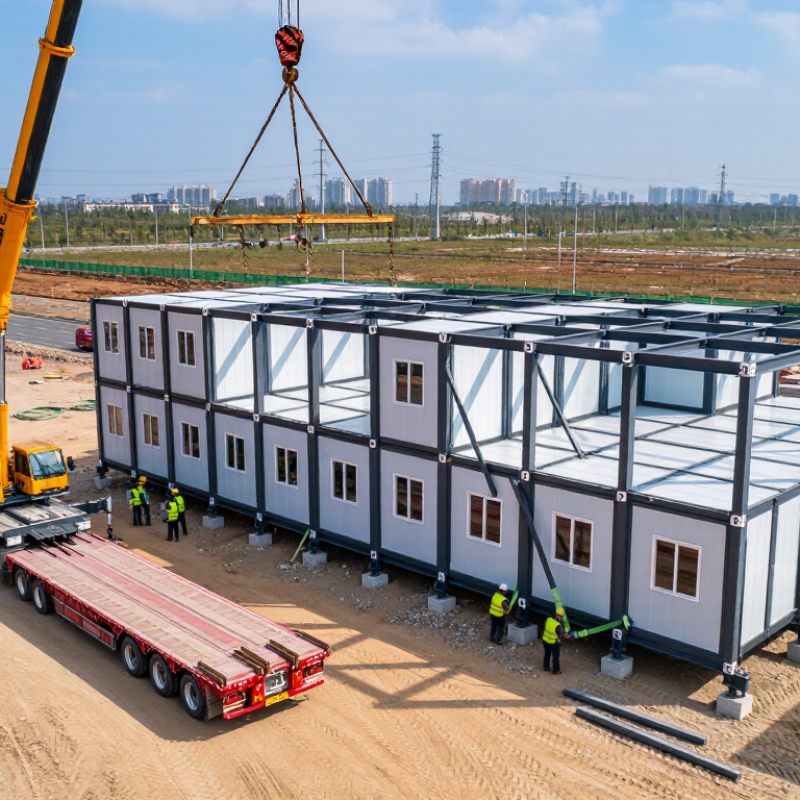
| Relocation Feasibility |
Confirm that the building can be disconnected, lifted, transported, and reinstalled without unacceptable structural or service damage. |
A site-specific engineering review is required before movement. |
Not every modular building is designed for repeated relocation; connections, finishes, utilities, and foundations must be assessed together. |
Structural engineer, modular-building specialist, owner |
| Building Survey |
Record module dimensions, total weight, center of gravity, lifting points, connection details, and existing defects. |
Use current drawings and verify them against field measurements. |
Accurate information is needed to select lifting equipment, transport vehicles, and temporary supports. |
Surveyor, engineer, relocation contractor |
| Structural Condition |
Inspect steel frames, welds, bolted joints, floor beams, roof members, bracing, corrosion, and previous modifications. |
Repair or reinforce damaged members before lifting. |
Movement creates temporary stresses that may differ from normal in-service loading. |
Licensed structural engineer, qualified inspector |
| Utility Disconnection |
Disconnect electrical power, water, drainage, gas, fire protection, data, HVAC, and other services using approved procedures. |
Services should be isolated, capped, labeled, and documented before transport. |
Prevents leaks, electrical hazards, contamination, and damage to service connections. |
Licensed electricians, plumbers, mechanical contractors |
| Interior Protection |
Remove or secure loose furniture, equipment, suspended ceilings, appliances, fragile finishes, and stored materials. |
Secure doors, windows, cabinets, and movable contents; protect vulnerable finishes. |
Reduces shifting, impact damage, vibration damage, and unauthorized movement during handling. |
Owner, moving contractor, installation team |
| Module Separation |
Remove inter-module bolts, seals, flashings, trims, walkways, stairs, and other elements that join separate modules. |
Mark every connection and record its original position before disassembly. |
Clear identification speeds reassembly and helps prevent incorrect connections. |
Modular installer, steelwork contractor, engineer |
| Lifting Plan |
Develop a lift plan covering crane capacity, rigging, lifting points, spreader equipment, exclusion zones, and communication procedures. |
Crane and rigging capacity must exceed the verified lifted load with an appropriate safety margin. |
Uneven lifting or incorrect rigging can distort the frame and damage floors, walls, or services. |
Lift planner, appointed person, crane operator, engineer |
| Transport Planning |
Choose the route and transport equipment after checking module dimensions, weight, road geometry, bridges, clearances, and access conditions. |
Oversize-load permits, route surveys, escorts, and temporary traffic controls may be required. |
Transport restrictions often determine whether a module moves intact or must be divided into smaller sections. |
Haulage contractor, transport authority, logistics coordinator |
| Temporary Support |
Use engineered supports, cribbing, dunnage, or transport frames to support the module during loading, travel, and unloading. |
Support locations must align with approved structural load paths. |
Prevents local overstressing, frame distortion, and damage to floors or cladding. |
Structural engineer, moving contractor |
| Foundation at New Site |
Prepare the new foundation, bearing points, anchors, drainage, site access, and level tolerances before delivery. |
Foundation design must reflect the relocated building loads and local ground conditions. |
Correct alignment and bearing are essential for structural stability and proper operation of doors and services. |
Geotechnical engineer, civil contractor, structural engineer |
| Permits and Compliance |
Obtain building, demolition or disconnection, transport, crane, road-use, utility, and reinstallation approvals as applicable. |
Requirements vary by jurisdiction, building use, dimensions, and route. |
Relocation can be treated as both a transport operation and a new construction project. |
Owner, permit consultant, authorities, engineers |
| Loading and Movement |
Lift or jack the modules according to the approved method, secure them for travel, and inspect them after loading. |
Use qualified personnel and a documented pre-movement checklist. |
Controlled handling reduces shock loads, instability, and accidental contact with nearby structures. |
Crane crew, transport crew, site supervisor |
| Reinstallation |
Set modules on prepared supports, align and connect them, restore weatherproofing, and reinstall stairs, ramps, roofs, and cladding. |
Check level, plumb, connection torque, seals, flashing, and anchor installation. |
Correct reassembly restores structural continuity, weather resistance, and safe access. |
Installer, steelwork contractor, engineer |
| Utility Reconnection |
Reconnect electrical, plumbing, drainage, HVAC, fire protection, communications, and other building systems. |
Test systems before occupancy, including leak, insulation, grounding, pressure, and functional checks as applicable. |
Testing identifies damage or incorrect connections before the building is returned to service. |
Licensed trade contractors, commissioning personnel |
| Post-Move Inspection |
Inspect the frame, cladding, finishes, doors, windows, roof, foundations, connections, and building systems. |
Complete an engineer’s inspection and retain movement, repair, and testing records. |
Confirms that the building remains safe, weather-tight, compliant, and fit for use. |
Engineer, building official, owner, commissioning team |
 Nova Build